

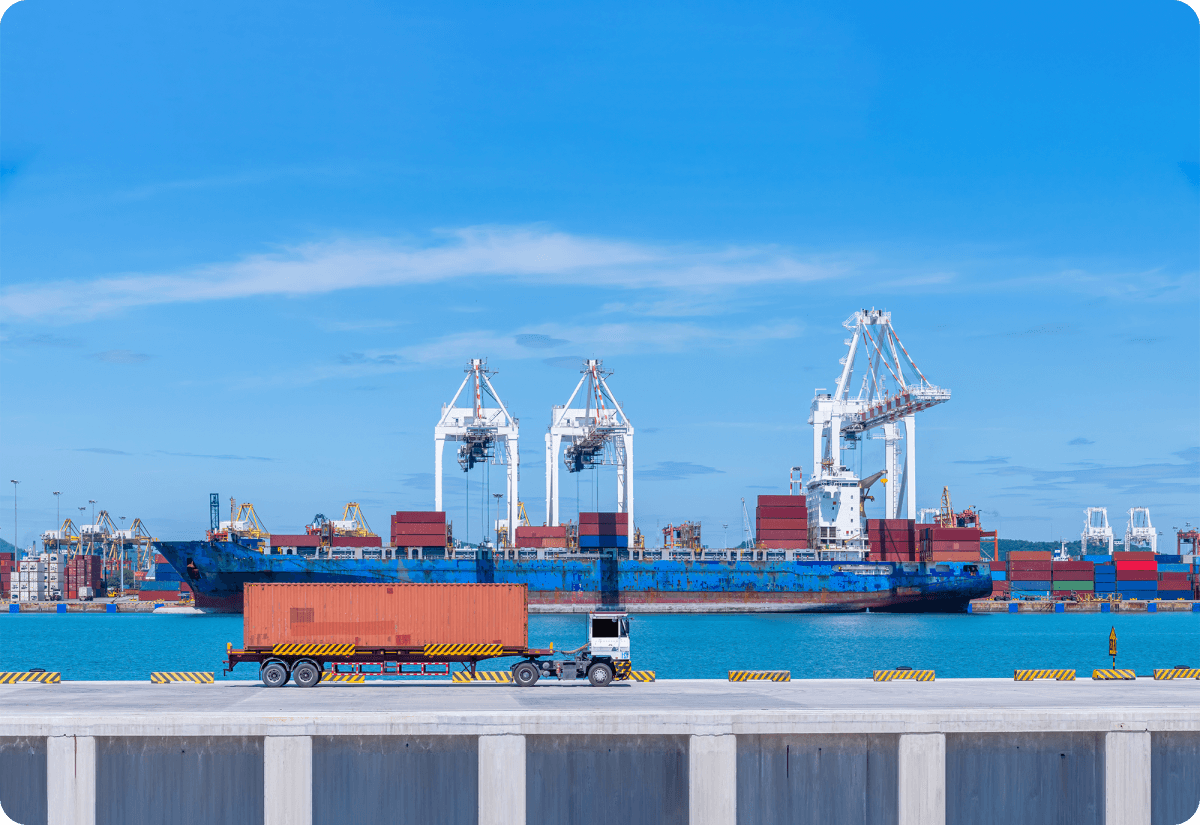
Shipping freight sounds straightforward until capacity dries up and your carrier stops returning calls. Most businesses feel that pressure regularly, and the ones feeling it most are usually locked into a single transportation mode. That’s why a multimodal transportation approach fixes exactly that.
It gives businesses the flexibility to keep freight moving regardless of what’s happening in any one part of the network. This blog covers how it works, where intermodal shipping drives the most cost savings, how carrier network planning supports execution, and how smarter transportation mode selection ties it all together.
How Multimodal Transportation Improves Shipping Flexibility
Multimodal transportation is the practice of moving freight across more than one transportation mode under a single coordinated shipment plan. This means more options, which translate to more control over how freight moves, what it costs, and how reliably it arrives.
What Multimodal Transportation Looks Like in Practice
Multimodal transportation takes different forms depending on what each shipment requires.
- Truck and rail combinations are common for long-haul domestic freight where rail handles the distance, and truck manages both ends of the journey.
- Ocean and truck pairings work well for international shipments where the ocean leg keeps costs manageable, and the truck completes inland delivery.
- Air and ground combinations come in for urgent freight where speed is non-negotiable. In each case, no single mode carries the full burden. Every leg is chosen based on what it does best for that part of the journey.

Why Flexibility Makes Your Supply Chain More Resilient
The real value of multimodal transportation shows up when something goes wrong. Port congestion, carrier capacity shortages, and weather delays all hit harder when your operation depends on a single mode to absorb them. Truck-only strategies are vulnerable to driver shortages and fuel cost spikes. Air-only approaches are expensive to sustain when demand surges.
When alternative modes are already built into your freight strategy, disruptions become manageable rather than critical. Businesses that handle disruptions best aren’t the ones with the most carriers in one mode. They’re the ones with options across several.
How Intermodal Shipping Reduces Transportation Costs
Intermodal shipping is a specific application of multimodal transportation where freight moves across multiple modes in the same container without being unloaded and reloaded between legs. That continuity is what drives the savings. Less handling means lower labor costs, less damage risk, and faster transitions between modes.
Where Intermodal Shipping Delivers the Most Value
The cost efficiency of intermodal shipping comes from a combination of:
- fuel savings
- reduced handling
- and better load efficiency.
On the fuel side, the numbers are hard to argue with — according to logistics performance data, rail can move one ton of freight over 470 miles on a single gallon of fuel. For long-haul lanes where trucks would otherwise be the only option, that difference compounds into significant freight savings. Reduced handling is the other major driver. Because the container moves across modes without being touched between legs, labor costs drop, and cargo damage risk falls with it.
Carrier Network Planning and How It Improves Freight Efficiency
A multimodal transportation strategy is only as strong as the carrier network executing it. Having a plan that spans multiple modes means very little if the carriers covering each leg aren’t reliable, coordinated, and capable of handling transitions smoothly.
Building a Carrier Network That Performs
A strong carrier network isn’t just a long list of contacts. It’s a deliberately built group of carriers with reliable coverage across the regions and modes your freight actually moves through:
- Trucking partners with consistent capacity on your key domestic lanes
- Rail and intermodal providers with proven performance on long-haul routes
- Ocean carriers with the service reliability your international shipments depend on
- Backup options within each mode, so a capacity issue with one carrier doesn’t become your problem at the last minute
Carrier selection decisions also compound over time. Defaulting to familiar carriers out of habit rather than performance data quietly inflates freight costs and lets service gaps persist longer than they should. Evaluating carriers on reliability, lane coverage, capacity consistency, and cost gives your carrier network a more solid foundation.
How Transportation Mode Selection Supports Supply Chain Efficiency
Every freight decision starts with a transportation mode selection. Get it right, and cost, speed, and reliability align. Get it wrong, and you’re either overpaying for speed you didn’t need or compromising service levels to save money in the wrong place.
Making Transportation Mode Decisions That Hold Up
Four variables shape every transportation mode decision: cost versus speed, shipment urgency, freight characteristics, and distance. These interact differently for every shipment. And optimizing for one often means accepting a tradeoff on another.
Freight characteristics like:
- Weight
- Volume
- Fragility
- Temperature sensitivity
Determine which modes are even viable. A consistent decision framework that weighs all four variables is what separates deliberate freight planning from reactive mode choices that quietly inflate costs over time.
Matching Transportation Modes to Business Needs
Different modes serve different purposes. The best multimodal freight strategies use each one deliberately:
| Transportation Mode | Best Used For | Key Advantage |
| Air | Urgent, time-sensitive shipments | Fastest transit times |
| Rail | Long-distance, non-urgent freight | Lowest cost per mile |
| Ocean | High-volume international freight | Cost efficiency at scale |
| Truck | Flexible domestic and last-mile delivery | Widest coverage and accessibility |
When transportation mode selection follows a consistent framework, delivery timelines become more predictable, and costs stop varying unpredictably from shipment to shipment. The carrier network also gets used more efficiently overall. That consistency compounds into measurable performance improvements across the full logistics operation over time.
More Transportation Options Mean More Control Over Your Freight
Multimodal transportation works because it removes the single points of failure that come with relying on one mode. If your freight strategy feels rigid right now, limited by capacity constraints or a carrier network that doesn’t give you enough options, the issue is usually that you’re working within too narrow a range of transportation choices.
At Supply Chain Solutions, we help businesses build multimodal freight strategies that match their shipping volumes, lanes, and service requirements. From carrier network planning to transportation mode selection, we bring the expertise to make smarter freight planning work in practice. Talk to our team and let’s discuss what a more flexible multimodal transportation strategy could look like for your operation.
