

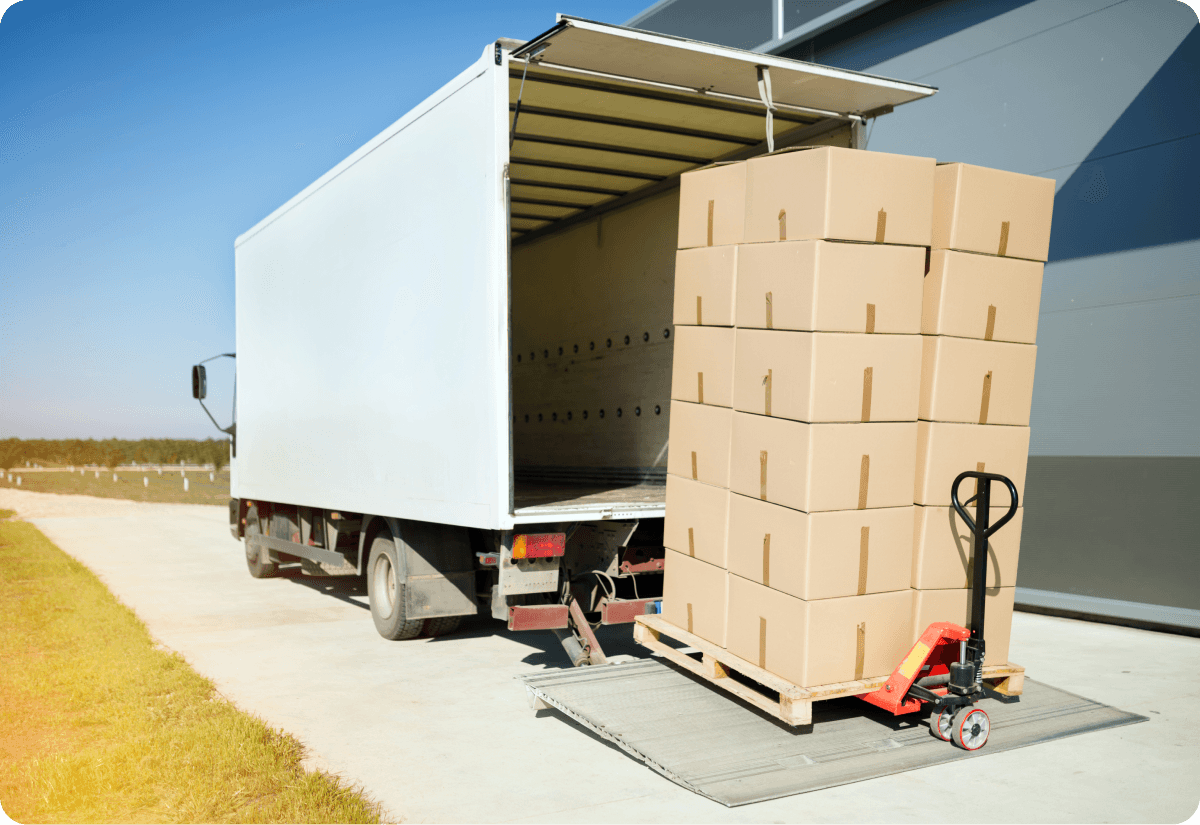
Receiving inventory on time doesn’t mean it’s ready to move. The gap between dock arrival and available stock is where warehouse efficiency is actually won or lost, and most operations don’t measure it closely enough.
That gap has a name: dock-to-stock time. A typical dock-to-stock time runs 48 hours, while best-in-class warehouse operations get it done in under 24. Slow dock-to-stock times create a domino effect that delays fulfillment and frustrates customers waiting on inventory that’s technically “in stock.”
This blog covers what inbound logistics actually involves and why closing that gap matters for every growing business.
What Is Inbound Logistics and How Does It Work
Inbound logistics covers everything involved in getting raw materials, components, or finished goods from suppliers into your warehouse: transportation, receiving, inspection, and storage. It’s the front half of your supply chain, and it sets the pace for everything downstream.
Inbound logistics typically involves four core pieces working together:
Sourcing and Procurement
Selecting suppliers, negotiating terms, and coordinating purchase orders. This stage determines what’s coming in, from where, and on what timeline.
Transportation
Moving goods from supplier locations to your facility, whether by truck, rail, or air. Transportation management at this stage directly affects how predictable your inbound flow actually is.
Receiving and Inspection
Verifying shipments against purchase orders, checking for damage, and logging accurate counts. This is where the process either sets your inventory up for accuracy or introduces the first errors of the cycle.
Storage and Putaway
Moving verified goods into their designated warehouse locations, ready for picking and fulfillment.
Outbound performance tends to get more attention, but inbound logistics is what determines whether outbound operations even have accurate inventory to work with.
How Inbound Freight Management Affects Your Warehouse and Inventory
Inbound freight management is the connective tissue between your suppliers and your warehouse floor. When it runs smoothly, goods move from the dock to the stock fast and accurately. When it doesn’t, every downstream process inherits the delay.
Here’s where the impact shows up most:
Dock-to-Stock Time
Poor scheduling creates congestion at the dock, which slows the time it takes goods to become sellable inventory. A well-organized warehouse layout, paired with warehouse management practices like designated receiving zones, keeps this time predictable instead of reactive.
Inventory Accuracy
Freight that isn’t verified against purchase orders at receipt introduces errors that compound through every later count. A good inventory accuracy rate sits at 98% or higher, but inconsistent inbound handling makes that benchmark hard to hit.
Labor Planning
Unpredictable arrival times make staffing nearly impossible to plan. Teams either overstaff to cover surges or scramble when volume spikes unexpectedly. Warehouse automation helps streamline this by automatically triggering putaway and picking workflows as freight is processed.
Inbound freight management isn’t a back-office function. It’s the foundation against which every downstream warehouse metric is measured.
Common Inbound Supply Chain Challenges and How to Overcome Them
Inbound supply chain challenges tend to repeat across businesses regardless of size. Most stem from the same root causes: unpredictable timing, limited visibility, and disconnected systems. Left unaddressed, these issues compound and become harder to untangle the longer they sit.
Here are the four that show up most often, and how to start fixing each one.
- Inconsistent Supplier Lead Times. Suppliers don’t always deliver on the timeline promised, throwing off labor planning and dock scheduling. Building buffer time into forecasts reduces the unpredictability.
- Limited Shipment Visibility. Without real-time tracking, teams don’t know what’s arriving until it’s already at the dock. Logistics automation closes this gap by surfacing shipment status and ETAs before freight physically arrives, giving teams time to prepare.
- Manual, Disconnected Processes. When receiving, inventory, and transportation data live in separate systems, errors multiply, and nobody catches them until much later. A connected transport management system ties these functions together so data flows automatically instead of through manual re-entry.
- Volatility in Freight Costs. Inbound freight costs fluctuate with fuel prices, capacity, and demand, making budgeting difficult. Locking in contract rates and diversifying transportation modes reduces exposure to sudden swings.
These supply chain challenges share a common thread: they get worse the longer they go unaddressed, and easier to fix the earlier they’re caught.
How Streamlined Receiving Operations Improve Your Entire Supply Chain
Receiving operations are the first real test of how well your inbound logistics actually function. When that test goes well, the benefits ripple through everything that follows. A structured, well-documented warehouse receiving process is what separates teams that catch errors early from teams that chase them later.
Three ripple effects stand out:
Warehousing
Accurate, organized receiving operations mean putaway happens faster and storage locations stay reliable. Less time is spent relocating misplaced freight or correcting bad slotting decisions. Regular inventory analysis becomes far more useful when the data feeding it starts clean at receiving.
Inventory Management
When receiving operations catch discrepancies at the point of intake, inventory counts stay trustworthy throughout the rest of the cycle. Fewer surprise stock outs, fewer phantom units, less time spent reconciling.
Order Fulfillment
Clean inbound data means picking and packing teams work from accurate stock levels instead of guessing. Fulfillment errors traced back to receiving mistakes drop sharply once receiving operations are standardized.
Supply Chain Solutions helps businesses streamline inbound logistics from the dock forward, turning receiving operations into a strength rather than a recurring bottleneck.
Get Inbound Logistics Working in Your Favor
Inbound logistics is often the most overlooked part of the supply chain, yet it shapes everything that happens after the dock. Small inefficiencies at receipt turn into bigger problems in inventory, fulfillment, and customer experience.
Supply Chain Solutions helps businesses build inbound processes that hold up under real volume. From transportation coordination to receiving accuracy and warehouse automation, we help teams turn inbound from a weak point into a competitive edge.
Connect with our team to close the gap between dock arrival and available stock.
Frequently Asked Questions
What is warehouse receiving?
Warehouse receiving is the process of accepting, inspecting, and logging incoming goods before they enter available inventory. Delays here ripple across supply chain operations and directly affect customer satisfaction. It’s the first point of control in your distribution center.
How does receiving connect to supply chain management?
Errors at intake compound downstream, slowing outbound logistics and making it harder to meet customer demand. Optimizing this step protects the accuracy of everything that follows in supply chain management.
What technology supports warehouse receiving?
WMS platforms reduce manual errors and processing delays on incoming goods. TMS integration extends visibility into transportation networks, helping teams align receiving schedules with delivery windows before trucks arrive.
How does receiving support supply chain resilience?
A structured receiving process helps operations absorb disruption without losing ground. When incoming goods are logged accurately, teams can identify shortfalls early before they affect outbound logistics or customer commitments.
Should I outsource warehouse receiving to a 3PL?
A 3PL with established distribution centers brings process infrastructure that supports compliance, sustainability, and global supply chain operations. The right partner can optimize receiving throughput without adding internal overhead.
